Showing posts with label Books 'n' Films. Show all posts

Thursday, April 02, 2009

The Curious Incident of the Dog in the Night-time – Mark Haddon

I am passing through a curious phase in life. I can’t seem to finish any book I start to read. I seem to only have enough attentiveness to finish a short article. I can’t seem to enjoy most programmes on television. I seem to watch only reality shows (hmmph and enjoy them too) and the **Aastha channel. I can’t seem to like eating regular food anymore, such as rice for lunch and chapattis for dinner. I seem to want anything but rice and chapattis for lunch!! I also seem to have developed a hunger for films over which I devour many packets of my favorite onion-flavored potato chips from Lays. I can’t seem to enjoy my weekends at home anymore. I seem to have a compelling need to go out and explore. As though time is running out. Now, what kind of life crisis is this?!

Hmmm, today’s post is to record and remind myself that there are exceptions too. For instance, I actually finished one book I had started, in three consecutive days flat, with nap-
gaps in between, of course. The book that kept me glued to it is the “The Curious Incident of the Dog in the Night-time” written by Mark Haddon. No, it is not a doggy tale, it is a mystery tale, rather. There is a dog but it gets killed in the very first page of the book. I don’t like fiction and films where dogs get killed which is why I did not pick up “Marley And Me” during my last trip to the bookstore and left watching the film based on it, mid-way. But, in this book I did not mind too much that the dog gets killed because it happens in the first page before I have formed attachment with the dog.

I would recommend The Curious Incident of the Dog in the Night-time to anyone who adores mysteries and thrillers. The story is about Christopher, an autistic boy gifted with a brand of intelligence quite different from the ordinary understanding of what “intelligence” comprises of. Christopher, inspired by Sherlock Holmes, his idol, gets involved in solving a mystery in unique style and while at it, discovers secrets about his own family that jar him in a peculiar way. This is where the mystery lies which you can find out if you read the book. The story is told in first person and this brings Christopher very close in the imagination of the reader besides speaking volumes about the brilliance of casting and composition of the author, Mark Haddon.

I think I hung on to the book – one, because of the mystery in it, two, because of the fantastic insights of an autistic person – about his own behavior and his observations about the behavior of “normal” people. And three, because of the skilled integration of mystery with insights into the mind of an autistic adolescent by the writer. Sample some parts of the book by clicking the images below for a larger view.


I hope you can read the book sometime.
*************
**Speaking of the Aastha channel, I enjoy hearing some discourses telecast through the channel such as those of Brahmakumari Shivani and Baba Ramdev. I heard Baba Ramdev say something very interesting the other day. He was expounding upon how the Indian way of life has been envisioned to be fee from violence and as an example he spoke of the mechanism of the broomstick. Brooms as we know have gaps between each of its sticks. According to Baba Ramdev, gaps have been deliberately conceived so that small insects - including ants caught in them can scamper to safety. Quite profound!

Thursday, February 26, 2009

Jai ho

After the triumph of Slumdog Millionaire at the Oscars, lots have been said and written about the film and lots is still being said and written. I wish to add a penny worth of my reflections too. I have already said in this space that I loved the film. I watched it at a time when it was lesser known, not received any award, and was not released in India. Now when I see it with the hype I still love it, maybe more. I am excited. So, what is it that I want to say?

In the last two days I have been reflecting on people’s reactions to the film after it won eight Oscars. Sadly, apart from the excited TV channels and those they interview, I haven’t had the opportunity to speak to anyone from my day-to-day life echoing the excitement I feel. Some are ambivalent, many critical. This has made me reflect on the act of expressing joy. And I am wondering why the expression of unadulterated joy difficult to come by? Must heady thought play spoilsport?

I dialed a friend immediately after the eighth and last award for the film had been announced. I just wanted to share my elation. “You know there is politics behind this”, was the response from the other end. I said I will call her again later. I was in no mood for politics. Later on I thought. A lot of institutions in this world have politics operating in the background. Politics of war. Politics of hate. Politics of power. Even politics of love. There is politics in our little households and workplaces, everyday. So what’s new if there is politics behind Oscar selections? If whatever politics put a beaming Rubina and Azharuddin – kids who have lived 9-11 years of their life next to open drains – on the Oscar stage, should we condemn that politics?

“Rubina and Azhar being on stage does not change anything. What about the thousands of other people living in slums?” was another opinion that another person expressed. But this is weird. The film is a work of art; it did not start out with the promise of changing anything. It is not a social/political movement. But does it not bring pride to the heart to think that the two kids who acted in the film and live in slums, never attended school in their little life, vulnerable at every point – will now receive formal education and upon reaching the age of 18, will be entitled to a sum of 25 lakh each to pursue higher education. I support the fact that they were not paid huge sums of money to act in the film – the money which under all probability would have been passed on to their caretakers. Now at least things are set and set in their best interests – the right to receive education.

Also, doesn’t the achievement of kids living in slums do something to our class mentality? For example, does it not bring to light the ingenuity and brilliance of people living in the “slums”. Doesn’t the fact that the conditions of birth can be changed, triumph?

Some of the people I spoke to said they are “ashamed” of Indian poverty having been shown in the film and have “it” (poverty) receive international awards. In other words they are ashamed of the “slums”. Ashamed of the people who live in the slums. But what right have we to be ashamed of anyone? This is showing sheer disrespect and sheer arrogance. We are not ashamed to hire domestic help from these very slums. Slums are a part of India and will remain so till skewed economic/social/development policies rule the land. Why does a single cricketer earn crores for his presence on the field for a few hours and the thousands of Rubinas and Azharuddins struggle for the basic amenities of life?

I was surprised that even A R Rehman’s recognitions were not wholeheartedly accepted. “He has composed much better music”, came as a whiff of opinion. But then no Tamil or Hindi film he composed for has been nominated for the Oscars. So where does the question of him receiving an Oscar before this arise? One person even said that Ilaiyaraja, Guru to Rehman should have been awarded instead!

Now, before this gets hilarious, I must stop. There were many other observations on similar lines and when I think about them, I want to ask the same question I started off with. Why is the expression of unadulterated joy difficult to come by? Must heady thought play spoilsport? I hope we are not denying ourselves the right to feel pure joy and revel in the success of people without asking too many politically correct questions.

Wednesday, January 07, 2009

Five Movies

In 2008 I watched a large number of movies – mostly Bollywood and very few foreign ones. From those I saw, I thought I want to make a list of the ones I liked most and ones that would be at the tip of my tongue if I were to recommend. Here I present my list which is in no particular order of priority. I am not describing the storylines because I don’t intend to present a review – I only want to record what it was in each of the movies that touched me. Some of the films may not have been released in 2008 but I had the opportunity of watching them in 2008 – this is my basis of including them in my list. Also, my list is irrespective of how each fared at the box office or how it appealed to the larger mass of movie goers.

Dasvidanya
This movie made me cry. No, not because the main protagonist dies in the end. Sometimes when you see too much of beauty and aesthetics around you – you cry. The movie is based on a very simple story told in an extraordinarily simple manner – that’s where its beauty lies, I think. The character of Amar, the main protagonist is marked by goodness – such people are rare. I felt like holding death’s hand to prevent Amar from getting consumed by it so that I can get the chance to see more of him in action! I watched this movie in a theatre and remember feeling the involvement of the rest of the people gathered there. The feeling was quite palpable. In fact it was interesting to note that after the film got over and as the credits came along, for a few minutes people were still seated – were they mentally chalking their “to do” list before they die? Likely, coz I was doing the same.

A Wednesday
This is a terrific thriller with a social message. When I had seen it in October last, a part of me had wanted to shower the “common man” with accolades knowing too well that in real life such drama is far from possible. Now after ten heavily armed men walked into the country through the sea route wrecking havoc for nearly three days thereafter, the same part of me wants to believe that the common man can do it! Strange na, there is still a part of me that screams – “kill ‘em all!!!!”, knowing very well that violence is not the solution neither becoming of the human race. Anyway, coming back to the movie, it is one hell of a must watch. I felt that Naseeruddin Shah or the common man’s dialogues towards the end of the movie binds and seals the plot like a fevicol ka jode. The movie left me spell bound.

Khuda key Liyae
This is a Pakistani production directed by Shoaib Mansoor – his debut film. Once again, Naseeruddin Shah as Moulana Wali dazzles with this speech in the court of law. The story weaves and presents some stark realities in Pakistani society – of gender-based biases, of gender-based violence, of youngsters becoming Kasab-like, of the post 9/11 western biases against practitioners of Islam, etc. How these factors affect the lives of the protagonists is poignantly told. Despite the melancholy, I could not stop watching the film. You just want to “get to the bottom of it!” Moulana Wali’s speech makes you wish that you knew more than the basic Urdu [:-)]. Yet, you get the crux and you wish he’d not stop talking. This film also makes you want to reach out to the people of Pakistan – so torn by destructive influences in their society – some influences from outside and most from within – in the form of regressive fundamentalists, customs, and politicians. At the end of the movie, you too join everybody else in saying a silent prayer for Shaan played by Mansoor and earnestly hope that he gets well soon.

Welcome to Sajjanpur
This is one movie that left me with a smile. Well, it’s categorized as a comedy film; it ought to make you smile. Well, I am talking of the lingering smile – when you think about something long after it’s over and it still makes you feel amused. But this is not a comedy film, strictly speaking. It is not mindless comedy, how can it be with Shyam Benegal having directed it. With great storytelling, various social issues from widow remarriage to forceful land acquisition are woven into the narrative with wonderful humor. Some turns in the movie are poignant – something that I believe strums a chord in your heart and makes the experience of watching this movie wholesome. Here, the main protagonist, Mahadev played by Shreyas Talpade is an immensely talented guy who has a way with both the spoken and written word. Mahadev comes across as such a darling.

Rock On
I simply loved the maturity with which this film has been presented. And I simply loved Farhan Akhtar crooning. If the film is about relationships, their portrayal and depth is commendable. Each performance I felt is brilliant. All the characters seem to have got into the skin of their roles. Newcomer Prachi Desai who played the role of Sakshi Shroff is so very fine – she has lived up to the depth demanded by her character. If the film is about a rock band, then they look like a real time rock band! I wish that Luke Kenny's character did not have to die in the end. Is it because he did not have a partner? Bollywood still has to answer that.

Slum Dog Millionaire
“What a plot!!” this was my first reaction to the movie. After seeing this masterpiece of a movie, I couldn’t help feeling proud that I watched it. But wait, I was not involved in its making in any manner, so why was I feeling so overwhelmed and proud!?! It is the same “Dasvidanya effect”!! What is so beautiful about the movie is its compelling storytelling. I saw the movie with a friend brought up in Germany and found myself explaining the meaning and implication of “riots” and of the significance of “Ram” in this land! We were so involved, we wanted Jamal (the main protagonist) to get all the answers right! At the same time I was thinking, you don’t need formal education to win contests, you need intelligence – the intelligence to assimilate the inputs from the environment around you. Most of the life events of little Jamal that helped him answer the questions were unfortunate – so I also wonder about the many people in this country for whom daily life is a struggle against so many odds. This is the last movie of 2008 that I saw. With this level of storytelling, I earnestly look forward to the releases of 2009.

Monday, January 01, 2007

The Five People You Meet in Heaven – Mitch Albom

This is a beautifully written book! It makes for a lovely NEW Year present!! HAPPY NEW YEAR!

This is the story of Eddie, who on his 83rd birthday “dies” in an accident and moves to the spiritual plane. Here, he is met by five people who “died” before him – some are those who he never “knew” in his lifetime. These meetings unfold the mysteries surrounding Eddie’s life, how he got to be the way he was when he was “alive”! These five people he meets guide him to basically understand how each of our lives is connected to the other without us even realizing it. “We move through places everyday that would never have been if not for those who came before us. Our work places, where we spend so much time – we often think they began with our arrival. That’s not true.”

They explain to him the events in his life. He comes to terms with the extreme anger that he still felt about the single event in his youth which changed the course of his life. “Holding anger is a poison. It eats you from inside. We think that hating is a weapon that attacks the person who harmed us. But hatred is a curved blade. And the harm we do, we do to ourselves.” He also understands what it means to sacrifice and how not to think of it in terms of what one “loses”. He understands that no life is a waste, and the only time we waste, is the time we spend thinking we are alone.

His wife who died before him is also one of the five people he meets. The meeting with his wife is a very moving and special one. His wife is the only woman he loved in a way that she remained in his memories in all the 30 years he lived after her “death”. His love for her is explained to him – a quiet, giving love that is deeply felt by both for the other. He is then explained the reason for her early death: to give expression to a love that is beyond the physical, his wife testifies that she has always felt his deep, quiet, grateful love even after her “death”. This is a very joyous reunion for Eddie and he does not want her to leave again; they tell each other every little thing that they missed sharing with the other until it is time for her to go once more...

The book ends on the note – “Each affects the other and the other affects the next and world is full of stories, but the stories are all one.” This awareness inspires to watch what we utter and do – lest we do not cause harm to the other.

This book was a riveting read, very moving too and left me with a very comfortable feeling – the feeling of coming “home”, the comfort of a healing experience. With its simple articulation, the beautiful narrative touches the deepest chords in our consciousness – the part of us that wonders at times about the mysteries of our being and what we are here for.

(The book has been made into a film by the same name directed by Lloyd Kramer and produced by Howard Ellis with teleplay written by the author himself. Mitch Albom is the author of the International bestseller and award-winning book, “Tuesdays with Morrie”).

Saturday, December 30, 2006

Life After Life – Raymond A. Moody

Life After Life, first published in 1975 is a classic bestseller written by parapsychologist, Raymond A. Moody. The book is based on Dr. Moody’s research on Near Death Experiences popularly known as NDEs. It has given a new direction to the understanding of “death” and inspired the first generation of researchers in the field to create a new science of near-death studies. What happens when we “die”, Is “death” the end of what we call life, What to make of it when our loved ones “pass away”… or do they just “pass on”, What is the basis of the “grief” we feel for our loved ones when they “die” are some of the questions hovering in our minds that find ample scope for an address through Dr. Moody’s path breaking research contained in this book.

The research is based on interviews of more than a 100 people who have been resuscitated after being pronounced clinically dead by their doctors, people who as a result of severe injury or illness have come close to physical death and people who have recounted their experiences as they “died”, to others. These recountings show that something very spiritual happens to us when we “die”. Unfortunately, there is collective denial about the spiritual basis of our existence. Those of us who have experienced NDEs fear being mocked at or dismissed as “mentally ill”. Many a times we do not believe our own selves. The book also mentions “scientific” grounding and the position of “science” on the phenomenon of NDEs which I leave to you to explore from the book. But what I would like to make a passing mention of is The International Association of Near-Death Studies (IANDS) a body with many chapters worldwide, that was formed after Dr. Moody’s research and is dedicated to building global understanding on NDEs.

The narrations made by Dr. Moody’s subjects have among others, one thing in common and that is the awareness of the unique essence of life arising out of their NDEs and I would like to quote from the book, “When we die, our own lives are evaluated and interpreted not according to how much money we made or our statues and prestige but according to the love we shared with others throughout our life.” The other commonality between all is an emphatic positive shift in their lives marked by self-esteem, empathy for others, peace and wholeness. I quote a few more lines, “Our society suffers from our lack of connection to each other and our collective lack of meaning in our lives. Homelessness, depression, drug abuse, alcoholism, road rage and gun violence all have at their roots a lack of spiritual wisdom.” Life After Life has been described as having “reconnected us with a timeless wisdom about death”.

Do we really “die” is a question that has always intrigued me. I have never been able to contain thinking that everything about a person ends when the heart stops beating. What about the memories and the impressions the person leaves behind? Many of us make a conscious attempt to “forget” them; this motivated forgetting really has a lot to do with the way we look at life and “death”. This book has a therapeutic effect – for many its poses a challenge by laying open a subject that has been an explosive topic of debate and for others it gives new directions.

The book has a foreword by Dr. Elizabeth Kubler-Ross, renowned psychiatrist who has worked extensively with terminally ill people and is the author of the landmark book, On Death and Dying. The preface contains an account of the interesting shifts over time towards looking at “death”. It is a must-read for anyone questing for an understanding, a book review hardly does any justice to what the complete research has to convey!

Sunday, May 28, 2006

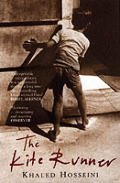
The Kite Runner - Khaled Hosseini

At the beginning of this month something peculiar happened. The internet service provider ran away with his entourage leaving behind woeful customers, I being one of them. On my part I tried to track him down and make him answerable but after a few unsuccessful attempts I gave up and decided to put my energies else where – what else, but at finding a new service provider. At first I felt really sorry to have lost my internet world but soon pulled myself together and decided that this was a fine chance to try and rake up another world. So I read. I finished reading The Kite Runner. It is easily the best book that I have read in the recent past.

Authored by Khaled Hosseini, the narrative is set in Afghanistan
and the US. It is a story about the relationship between two "friends" belonging to two different ethnic communities of Afghanistan - one dominant, the other, marginalised. Their relationship becomes yet more complex because one is the master, the other his “servant”. Not only that, the political milieu adds some more complexities to the relationship. The master is the "hero" of the story because his character simply fulfills what it takes to be a “hero” in a narrative. The character who captures the heart of the reader is undoubtedly Hassan, the Hazara boy, the “servant”. The essence of his being is carried throughout the story. The character of Hassan is immensely moving and it is very easy to respect him and be totally fond of him. I found that I developed a love-hate relationship with the hero of the story! One can’t hate him for too long because of his honesty. Also because of other things, let me elaborate a little later.

It is also a story about the relationship between a father and a son – a father who had rather not want a son the way he (son) was and a son who wanted to win his father’s appreciation, yet not be like him. How and in what direction the relationship changes over time has also been brought forth remarkably well.

At the backdrop of the story, the political situation of Afghanistan moves, chronicling over 30 years till about 2002 - from the last few years of the (40-year old stable) reign of Zahir Shah (that began in 1933) to the internal coup that overthrew him to the Communists and then to the dark period brought about by The Taliban. Some of the story is also based in the US where the father and son had to take political asylum in 1980 following the “Roussi” invasion. A part of the story is also told in retrospect.

My thoughts come back to the hero. I am quite convinced that his character is influenced to some extent by the author’s own. Khaled Hosseini was born in Afghanistan and his family moved to the US in 1980. The hero is a soft-spoken literary sort, quite unlike the typical repulsive “masculine” male. He likes to read poetry, wins every poetry competition, loves to fly kites, loves to write, detests any Afghan sport that has to do with killing and does not retaliate at the neighborhood bullies. The most beautiful aspect of his personality is that even in his childhood, although he notices he is unlike the rough and tough kinds, he is most unwilling to change, he is just so secure with the way he is. At a point in his adulthood he is faced with situations where he has the option to either accept or reject his lady love when questions of her chastity etc. come up. Without any effort at any kind of debate within himself or otherwise, he promptly chooses to be by her side. In doing so he does not regard himself a martyr of sorts; he simply puts it saying that to judge a woman by patriarchal standards is something he was never socialized into – for he was never exposed to the “double standards” of men in his childhood, neither in his youth. His mother died at childbirth and father never married.

The narrative brings forth the sheer craftsmanship of the writer – the language has an irresistible flow – and conveying such complexities in simple language is an art I think and Khaled Hosseini in his debut novel, is a prototype of this thought. The words and phrases in native language finely blend with the English language – another very attractive element of the narrative.

Once begun, it is difficult to put down the book. In that, it has an element of understated mystery. Also it leaves you for some days with very warm thoughts. The Kite Runner is in my list of favorites and recommended reads :-)